Setting Boundaries & Preventing Work‑Life Burnout Toolbox Talk: Protecting Employee Wellbeing
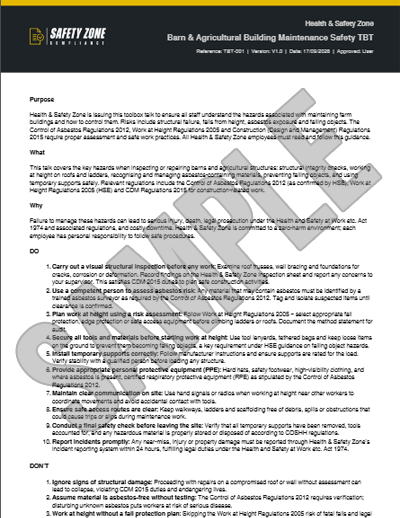
The Setting Boundaries & Preventing Work‑Life Burnout Toolbox Talk template from Health & Safety Zone provides essential guidance on recognising burnout symptoms, establishing healthy work boundaries, and preventing work-related stress. Suitable for offices, construction sites, and industrial workplaces, this toolbox talk helps workers understand how to maintain mental wellbeing and reduce accident risk in compliance with UK regulations.
Why Is Preventing Burnout Important?
Protects Workers: Burnout impairs concentration, increases error rates, and heightens the risk of workplace accidents. Recognising warning signs early enables timely intervention to protect employee health and workplace safety.
Improves Productivity: Well-rested employees demonstrate better focus, decision-making, and productivity. Regular breaks and clear boundaries reduce chronic fatigue and support sustained performance.
Compliance with Regulations: The Management of Health and Safety at Work Regulations 1999 requires employers to assess psychosocial risks including work-related stress. The Working Time Regulations 1998 mandate rest breaks and limits on weekly working hours.
Key Benefits of the Toolbox Talk
Hazard Awareness: Identifies burnout symptoms including fatigue, irritability, and reduced performance, linking them to increased safety risks and workplace incidents.
Control Measures: Outlines practical strategies including taking regular breaks, setting work boundaries, disconnecting after hours, and accessing wellbeing resources to manage stress levels.
Emergency Response: Encourages open dialogue with supervisors, documenting near-misses, and seeking support through employee assistance programmes when burnout symptoms arise.
Customisable for Any Workplace: Fully editable to address your organisation’s specific risk assessments and safety procedures.
Regulatory Compliance: Ensures alignment with UK health and safety laws for a legally compliant working environment.
Simplifying Toolbox Talk Creation with Our Online Generator
Health & Safety Zone’s online document generator allows you to customise this toolbox talk, tailoring it to your workplace’s unique hazards and safety goals.
Promoting a Proactive Safety Culture
Encourages Accountability: Reinforces individual responsibility for workplace safety and personal wellbeing.
Supports Continuous Improvement: Helps organisations learn from incidents to enhance safety measures and mental health support.
Useful Resources and Links
The Management of Health and Safety at Work Regulations 1999
The Working Time Regulations 1998
HSE: Stress and mental health at work
HSE: Work-related stress and how to manage it