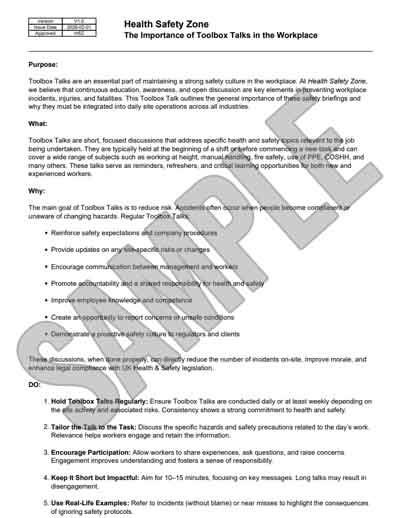
Intravenous Therapy and Cannulation Safety Toolbox Talk: Protecting Patients and Healthcare Staff
The Intravenous Therapy and Cannulation Safety Toolbox Talk template from Health & Safety Zone provides essential guidance on safe IV therapy procedures, needlestick injury prevention, and infection control. Suitable for hospitals, care homes, and community healthcare settings, this toolbox talk helps workers understand how to minimise risks to patients and staff in compliance with UK health and safety regulations.
Why Is IV Therapy Safety Important?
Protects Workers: Needlestick injuries from IV cannulation pose serious risks of bloodborne virus transmission, including hepatitis B, hepatitis C, and HIV. Proper use of safety-engineered devices and sharps disposal procedures significantly reduces these risks.
Improves Patient Safety: Correct aseptic technique, site monitoring, and documentation prevent complications such as phlebitis, infiltration, and catheter-related bloodstream infections, improving patient outcomes and reducing hospital stays.
Compliance with Regulations: The Health and Safety (Sharp Instruments in Healthcare) Regulations 2013 require employers to eliminate or minimise sharps injuries through risk assessment, provision of safety-engineered medical sharps, staff training, and incident reporting.
Key Benefits of the Toolbox Talk
Hazard Awareness: Covers needlestick injuries, infection transmission, medication errors, extravasation, and phlebitis, ensuring staff recognise and control all IV therapy hazards.
Control Measures: Details practical controls including safety-engineered cannulae, 2% chlorhexidine skin preparation, secure dressings, clear labelling, daily site monitoring, and immediate sharps disposal in puncture-proof containers.
Emergency Response: Outlines procedures for adverse event reporting, needlestick injury management, and post-exposure prophylaxis, ensuring rapid response to incidents.
Customisable for Any Workplace: Fully editable to address your organisation’s specific risk assessments, local protocols, and safety procedures.
Regulatory Compliance: Ensures alignment with UK health and safety laws, including COSHH Regulations 2002 and Medical Devices Regulations 2002, for a legally compliant working environment.
Simplifying Toolbox Talk Creation with Our Online Generator
Health & Safety Zone’s online document generator allows you to customise this toolbox talk, tailoring it to your workplace’s unique hazards, patient populations, and safety goals.
Promoting a Proactive Safety Culture
Encourages Accountability: Reinforces individual responsibility for safe sharps handling, hand hygiene, and infection prevention.
Supports Continuous Improvement: Helps organisations learn from needlestick incidents and catheter complications to enhance safety measures.
Useful Resources and Links
Health and Safety (Sharp Instruments in Healthcare) Regulations 2013: https://www.hse.gov.uk/pubns/hsis7.htm
HSE Safe Working Practices for Blood-Borne Viruses: https://www.hse.gov.uk/biosafety/blood-borne-viruses/safe-working-practices.htm
COSHH Basics – Control of Substances Hazardous to Health: https://www.hse.gov.uk/coshh/basics/index.htm